Follow Us:

News

How to Choose the Right UV Curing Machine for Your Printing Application

2026-01-12 0 Leave me a message

A UV curing machine plays a critical role in modern printing, coating, and industrial manufacturing processes. Choosing the right UV curing system directly affects print quality, production efficiency, energy consumption, and long-term operating costs. This in-depth guide explains how UV curing machines work, compares different UV technologies, and provides a practical framework to help you select the most suitable UV curing machine for your specific application.

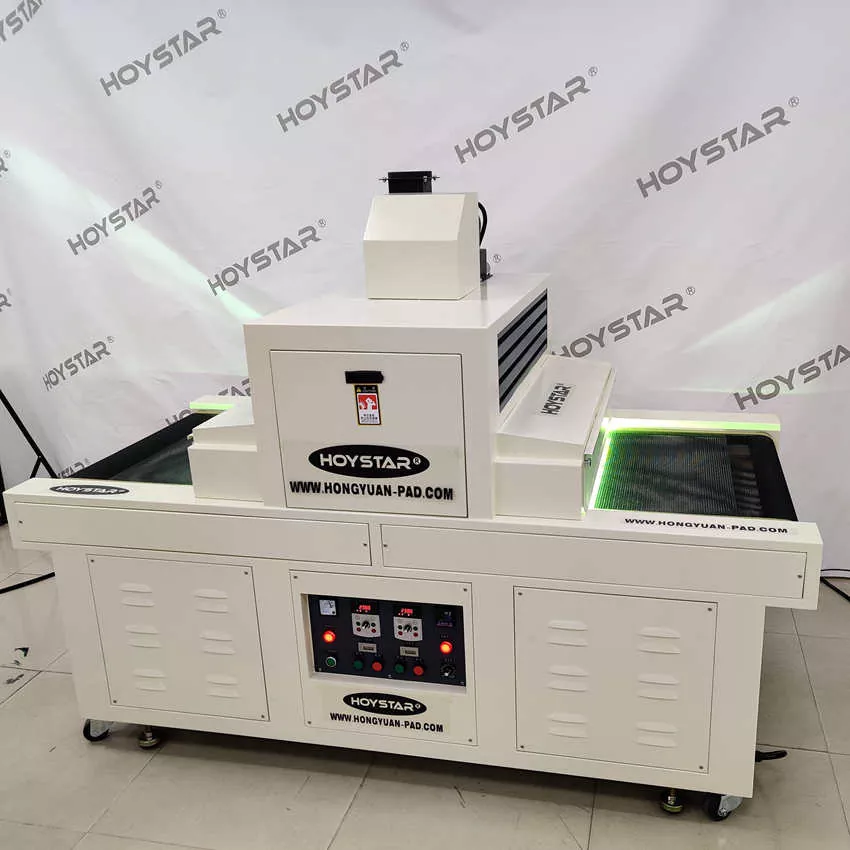
UV Curing Machine

Table of Contents


1. What Is a UV Curing Machine?

A UV curing machine is an industrial device that uses ultraviolet light to instantly cure, dry, or harden UV-sensitive inks, coatings, adhesives, and resins. Unlike traditional thermal drying, UV curing relies on photochemical reactions rather than heat evaporation.

When exposed to UV light at specific wavelengths, photoinitiators in UV inks or coatings trigger rapid polymerization, turning liquid materials into solid films within milliseconds. This technology is widely adopted in printing, electronics, automotive, medical devices, and packaging industries.


2. How Does a UV Curing Machine Work?

The working principle of a UV curing machine consists of four core components:

  • UV Light Source: Mercury lamps or UV LED modules
  • Reflector System: Focuses UV energy onto the substrate
  • Cooling System: Air or water cooling to control temperature
  • Control System: Adjusts power, exposure time, and curing speed

As the printed or coated material passes through the UV irradiation zone, the UV energy initiates instant curing, allowing immediate handling, stacking, or post-processing without waiting time.


3. Key Applications of UV Curing Machines

UV curing machines are used across a wide range of industries due to their speed, precision, and material compatibility.

Industry Typical Applications Benefits
Printing UV inkjet, screen printing, offset printing Instant drying, vibrant colors
Packaging Labels, cartons, flexible packaging High adhesion, scratch resistance
Electronics PCB coating, component bonding Precision curing, low heat
Automotive Interior coatings, optical parts Durability, fast cycle time

4. Types of UV Curing Machines Explained

4.1 Mercury UV Curing Machines

Traditional mercury UV curing machines use high-pressure mercury lamps that emit broad-spectrum UV light. They are powerful and compatible with many UV formulations.

4.2 UV LED Curing Machines

UV LED curing machines use semiconductor light sources that emit narrow-band UV wavelengths. They are increasingly popular due to energy efficiency and long service life.

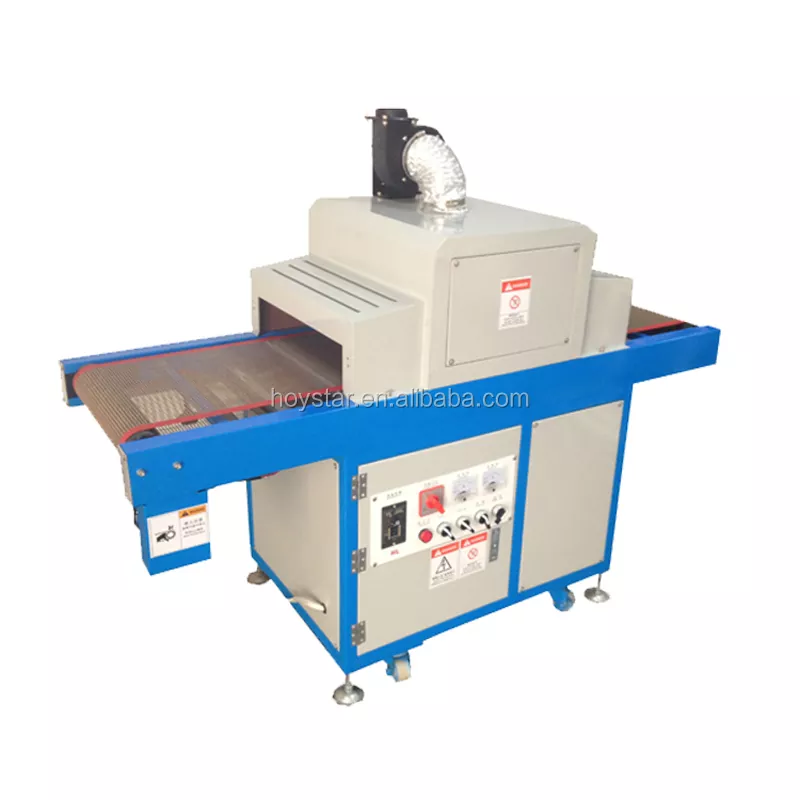
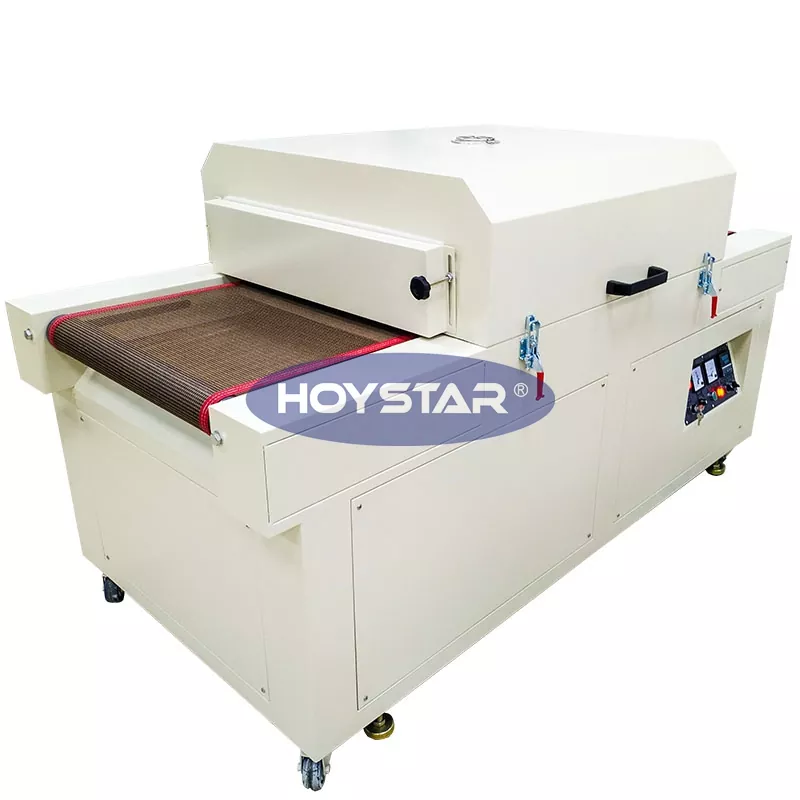
4.3 Conveyor-Type UV Curing Machines

Designed for continuous production, conveyor UV curing machines are commonly used in industrial printing and coating lines.


5. Critical Factors When Choosing a UV Curing Machine

Selecting the right UV curing machine requires a thorough evaluation of multiple technical and operational factors:

  • Ink or Coating Type: UV formulation compatibility
  • Wavelength Requirement: 365nm, 385nm, 395nm, or 405nm
  • Substrate Material: Paper, plastic, glass, metal, or wood
  • Production Speed: Line speed and curing intensity
  • Heat Sensitivity: Especially important for thin films and electronics
  • Maintenance and Lamp Life: Operational cost considerations

Professional manufacturers like HOYSTAR typically provide customized UV curing solutions based on application-specific requirements.


6. UV Lamp vs UV LED: A Detailed Comparison

Feature UV Mercury Lamp UV LED
Energy Consumption High Low
Heat Output High Minimal
Lamp Life 1,000–2,000 hours 20,000+ hours
Warm-up Time Required Instant on/off

7. Energy Efficiency and Environmental Impact

Modern UV curing machines are increasingly designed to meet sustainability goals. UV LED technology significantly reduces power consumption and eliminates ozone generation.

Companies seeking green manufacturing certifications often prefer UV LED curing machines for their reduced carbon footprint and lower waste generation.


8. Integration with Printing and Production Lines

A UV curing machine must integrate seamlessly with existing production equipment. Key integration considerations include:

  • Mechanical dimensions and installation space
  • Electrical compatibility
  • PLC and control system synchronization
  • Safety and shielding requirements

You can learn more about industrial UV curing solutions through UV curing machine technology resources.


9. Common Mistakes to Avoid When Buying a UV Curing Machine

  1. Ignoring ink compatibility
  2. Underestimating production speed requirements
  3. Focusing only on upfront cost instead of total cost of ownership
  4. Overlooking after-sales service and technical support

10. Frequently Asked Questions (FAQ)

Q1: How long does UV curing take?

UV curing typically occurs within milliseconds to seconds, depending on ink formulation and UV intensity.

Q2: Is UV curing safe for heat-sensitive materials?

Yes, especially UV LED curing machines, which produce minimal heat.

Q3: Can one UV curing machine handle multiple applications?

With adjustable power and wavelength options, many systems can support multiple applications.

Q4: How often does a UV curing machine need maintenance?

Maintenance frequency depends on lamp type, operating hours, and environmental conditions.


Conclusion

Choosing the right UV curing machine is a strategic decision that impacts product quality, operational efficiency, and long-term profitability. By understanding UV technologies, application requirements, and total cost factors, manufacturers can make informed investments that support sustainable growth.

If you are looking for reliable, high-performance UV curing solutions tailored to your production needs, HOYSTAR offers professional consultation and advanced UV curing systems. Contact us today to explore how the right UV curing machine can transform your production line.

Related News
Leave me a message
X
We use cookies to offer you a better browsing experience, analyze site traffic and personalize content. By using this site, you agree to our use of cookies. Privacy Policy
Reject Accept