Article Summary: Choosing the right Screen Frame Making Equipment is not only about buying machines; it is about controlling screen tension, exposure accuracy, coating uniformity, drying stability, labor efficiency, and long-term production costs. This article explains what screen frame making equipment includes, why it matters for print quality, how different machines work together, and what buyers should check before investing in a complete screen preparation solution. For printing workshops, industrial manufacturers, and screen printing service providers, a reliable setup can reduce outsourcing delays, improve repeatability, and make production planning far more predictable.
Table of Contents
Article Outline
Screen Frame Making Equipment refers to the machines and supporting tools used to prepare screen printing frames before they enter the printing process. A finished screen frame may look simple from the outside, but its quality depends on several controlled steps: stretching the mesh, fixing it onto the frame, applying emulsion, drying the coated screen, exposing the image, washing out the design, and preparing the screen for production.
In screen printing, the frame is the foundation of every print. If the mesh tension is uneven, the printed image may shift. If the coating thickness varies, fine details may become blurred. If exposure is unstable, the stencil may break down too early. These issues are not small workshop annoyances; they can become expensive production problems when orders are urgent, materials are costly, or customers require repeatable results across multiple batches.
For this reason, many printing businesses move from outsourcing screen preparation to building their own screen frame making area. With the right machines, operators can prepare frames according to their own production schedule instead of waiting for third-party suppliers. This is especially valuable for companies handling customized logos, packaging, textile printing, glass printing, plastic parts, metal panels, labels, advertising boards, and other industrial applications.
Many buyers begin looking for Screen Frame Making Equipment after facing the same problem again and again: the printing machine is ready, the order is ready, the ink is ready, but the screen is not. A delayed screen frame can hold back an entire production line. Worse, a poorly made screen can waste substrates, ink, labor time, and customer trust.
One common pain point is inconsistent screen tension. When mesh is stretched by hand without proper control, the center and corners may not carry the same tension. During printing, this can cause registration errors, uneven ink transfer, or shortened screen life. Another pain point is unstable emulsion coating. If the coating is too thick, exposure becomes difficult. If it is too thin, the stencil may lack durability. If the coating is uneven, the final print may show pinholes, sawtooth edges, or weak image definition.
Buyers also worry about operator dependence. When screen preparation relies too heavily on one experienced technician, production becomes risky. If that person is absent, quality drops. Well-selected equipment helps standardize the process, allowing trained operators to follow repeatable procedures rather than relying only on personal experience.
There is also a cost issue. Outsourcing screen frames may seem convenient at first, but frequent orders, urgent changes, remakes, and transportation costs can add up quickly. In-house screen making does not remove all costs, but it gives the factory more control over timing, quality, and confidentiality, especially for customized or trial-production projects.
Practical insight: A screen printing machine can only perform as well as the screen frame allows. Before upgrading the printer itself, many factories should first check whether their screen preparation process is stable enough to support high-quality output.
A complete screen frame making setup usually includes several types of equipment. Each machine solves a different problem, and together they create a more controlled production process.
Screen stretching machines are used to stretch mesh evenly across a frame. The goal is to achieve controlled tension so that the screen remains stable during printing. For large-format printing, fine-detail graphics, or repeated industrial jobs, stable tension is especially important.
Emulsion coating machines help apply a consistent layer of photosensitive emulsion onto the screen mesh. Compared with manual coating, a machine-assisted process can improve uniformity and reduce operator variation. This is useful for workshops that need stable stencil thickness across multiple screens.
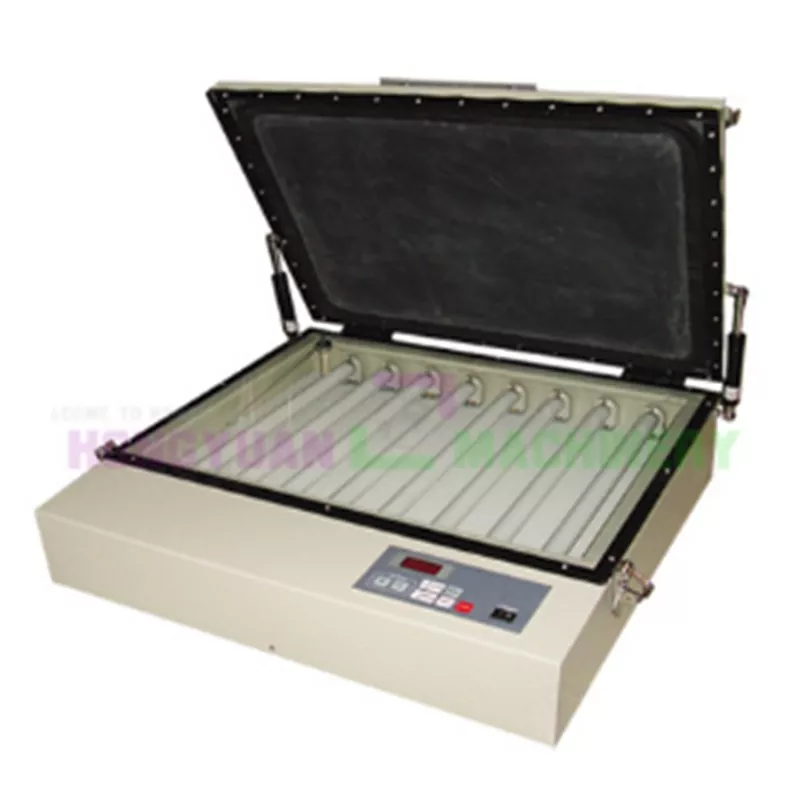
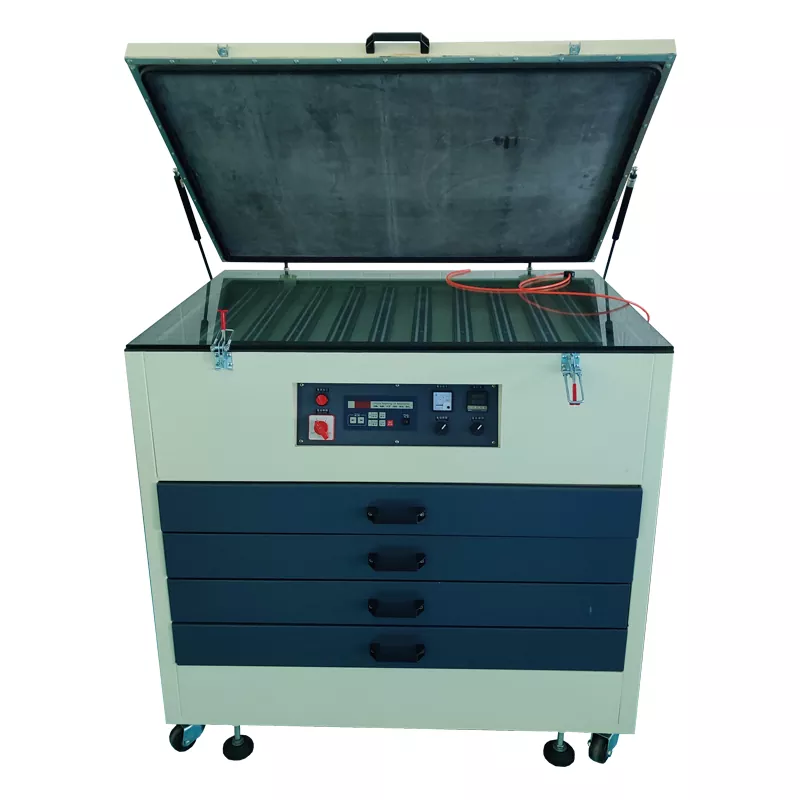
UV exposure units transfer the design image onto the coated screen. During exposure, ultraviolet light hardens the emulsion in selected areas, while the unexposed areas are washed away to form the printing pattern. Exposure precision affects line clarity, dot quality, and stencil durability.
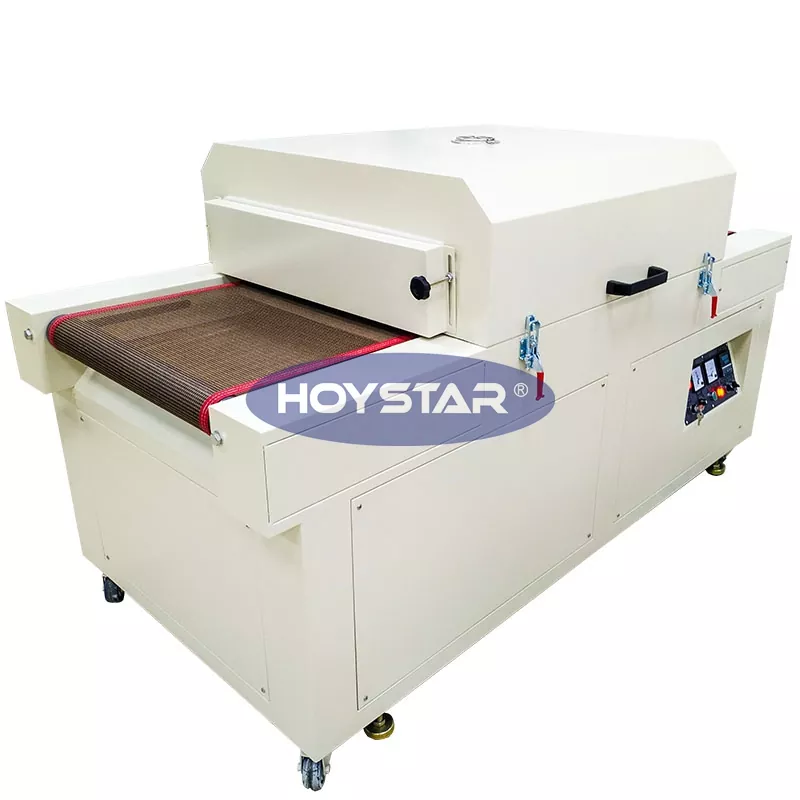
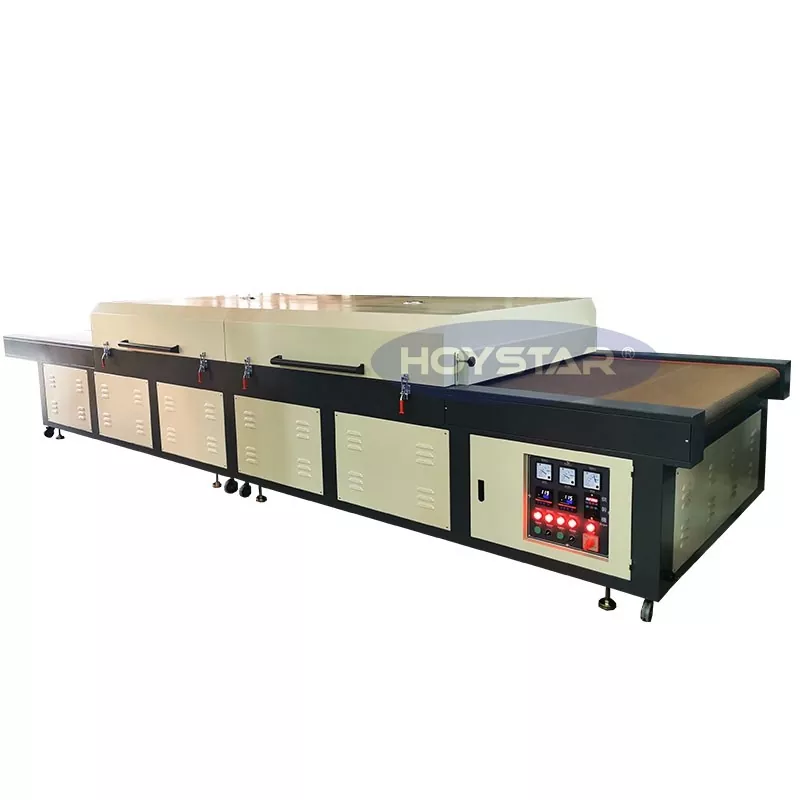
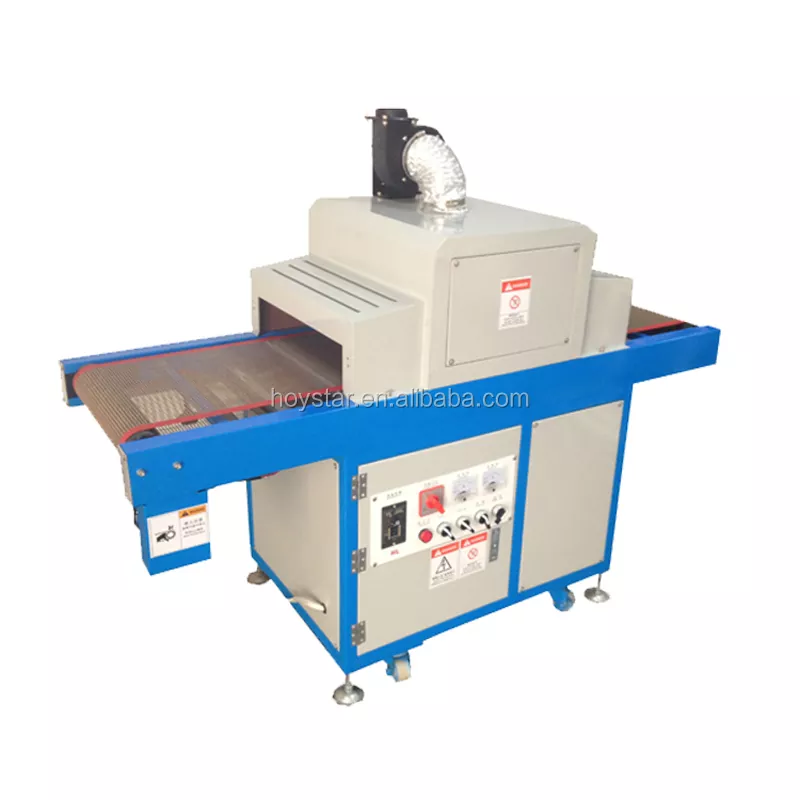
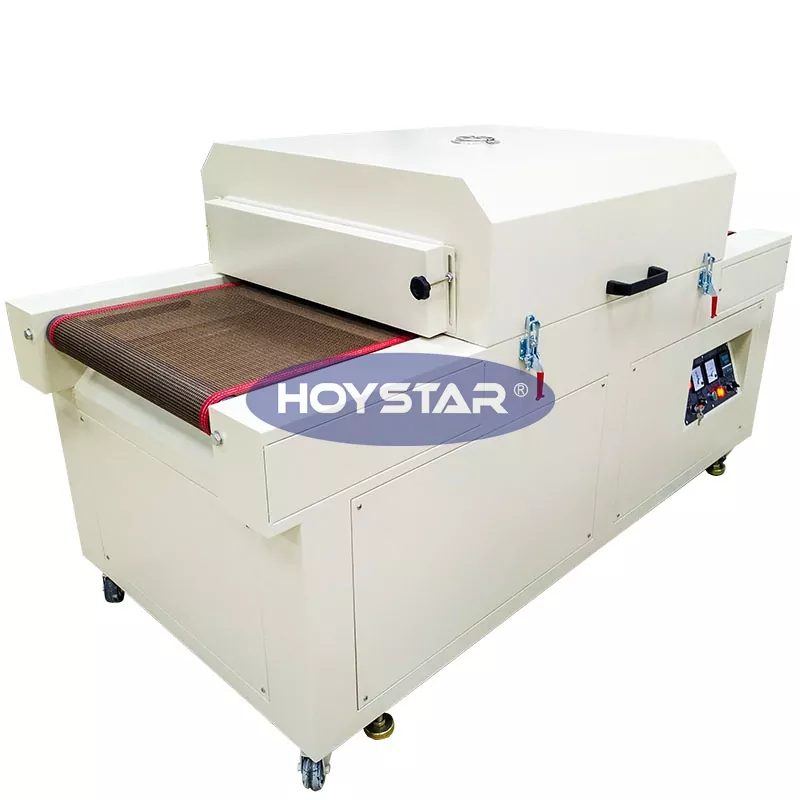
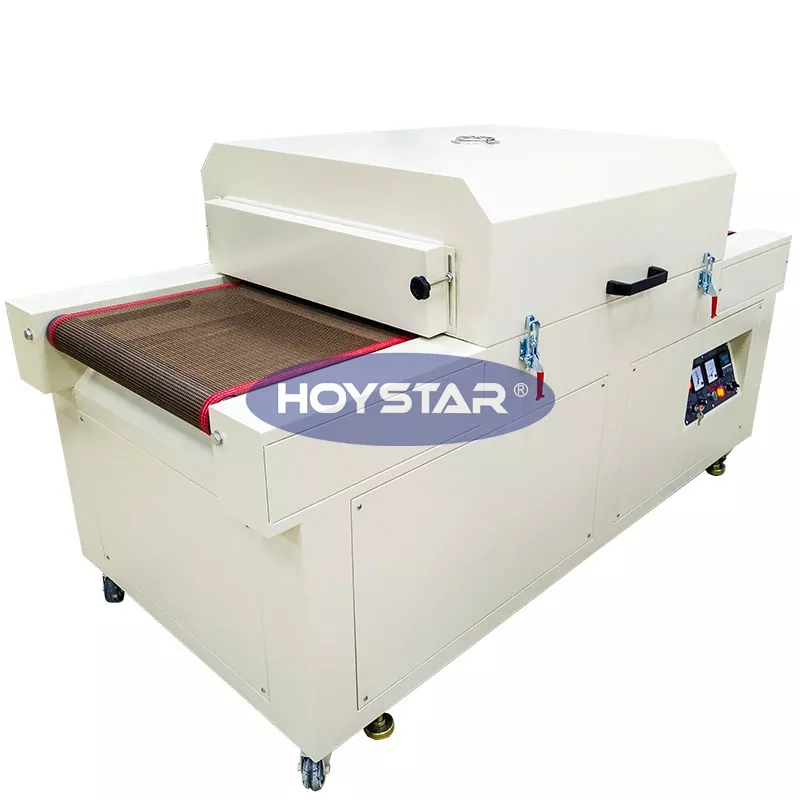
Drying ovens are used after coating, washing, or cleaning steps. Controlled drying helps prevent dust contamination, uneven moisture, and production delays. In humid environments, a reliable drying system can be the difference between a predictable workflow and constant waiting.
Supporting materials such as aluminum frames, screen mesh, coating tools, squeegees, and related consumables also matter. Even excellent machines cannot deliver consistent results if the mesh quality is poor or the frame is not dimensionally stable.
Choosing Screen Frame Making Equipment should start with production needs, not with machine size alone. A small studio that prints customized gifts does not need the same setup as a factory producing large advertising panels or industrial parts. The best choice depends on frame size, mesh count, print accuracy, daily output, operator skill level, available space, and budget.
First, buyers should define the largest and smallest screen frame sizes they need to produce. Equipment should match real production dimensions, with enough margin for future orders. Buying a machine that is too small may limit future business, while buying one far beyond actual needs may waste space and capital.
Second, buyers should consider the required printing precision. For simple solid-color graphics, the tolerance may be more forgiving. For fine lines, small text, electronics panels, labels, or multi-color printing, screen preparation must be more accurate. In these cases, tension control, coating consistency, and exposure stability become more important.
Third, buyers should look at workflow balance. A fast stretching machine will not solve production delays if exposure capacity is too low. A good equipment plan should avoid bottlenecks. For example, if a workshop prepares many screens per day, drying capacity and coating consistency may be just as important as stretching speed.
Fourth, maintenance and training should be considered before purchase. Equipment that is easy to operate, clean, adjust, and service can reduce downtime. Buyers should also ask whether the supplier can provide operation guidance, spare parts support, and practical recommendations based on the buyer’s printing application.
Each stage of screen frame preparation has its own quality risk. The table below gives a clearer view of how different machines contribute to the final printing result.
| Production Stage | Recommended Equipment | Main Purpose | Common Problem It Helps Reduce |
|---|---|---|---|
| Mesh stretching | Screen stretching machine | Applies controlled mesh tension across the frame | Registration errors, mesh looseness, uneven ink transfer |
| Emulsion coating | Automatic or semi-automatic emulsion coating machine | Creates a smooth and consistent emulsion layer | Pinholes, uneven stencil thickness, unclear image edges |
| Drying after coating | Drying oven or screen drying cabinet | Dries coated screens in a cleaner, more controlled environment | Dust marks, slow drying, unstable exposure results |
| Image exposure | UV exposure unit | Transfers artwork accurately onto the coated screen | Weak stencil, overexposure, underexposure, loss of detail |
| Screen preparation support | Aluminum frames, screen mesh, accessories, cleaning tools | Supports stable frame structure and repeatable preparation | Frame deformation, mesh mismatch, short screen life |
This comparison shows why buyers should avoid thinking of equipment as separate isolated machines. In actual production, screen quality depends on the connection between each step. A well-stretched screen still needs uniform coating. A well-coated screen still needs correct exposure. A good exposure result still needs careful drying and handling.
A complete screen frame making workflow helps a factory turn screen preparation into a predictable production routine. Instead of treating every new screen as a separate manual project, the workshop can build standard operating procedures for mesh selection, frame cleaning, tension setting, coating passes, drying time, exposure time, and final inspection.
This makes production planning easier. For example, if a customer changes artwork, the factory can prepare a new screen faster. If a repeat order arrives, the team can reproduce the screen conditions more closely. If a screen fails during production, the replacement process becomes quicker and less stressful.
Another benefit is better cost visibility. When screen making is outsourced, the visible cost is usually the supplier’s quotation. The hidden costs may include waiting time, delivery fees, communication errors, urgent remake charges, and production idle time. With in-house equipment, the factory can calculate material consumption, labor time, machine capacity, and remake rates more clearly.
For companies producing customized orders, confidentiality can also matter. Some customers provide private designs, brand logos, technical markings, or unreleased product graphics. In-house screen preparation reduces the need to send sensitive artwork to external suppliers, giving the manufacturer stronger control over customer information.
When evaluating Screen Frame Making Equipment, buyers should look beyond surface appearance. A machine that looks solid may still perform poorly if it cannot hold stable settings, if its controls are difficult to adjust, or if it creates inconsistent results from one screen to another.
For stretching equipment, check whether tension can be applied evenly and whether the structure supports the frame size you need. For coating equipment, pay attention to movement stability, coating control, and ease of cleaning. For exposure equipment, consider light uniformity, timer accuracy, vacuum performance, and whether the unit is suitable for the screen sizes and materials used in your workshop.
Safety should also be part of the purchase decision. UV exposure units should be operated with proper protection, and drying equipment should maintain stable temperature control. Operators should receive training on safe machine use, screen handling, cleaning procedures, and maintenance routines.
Spare parts and after-sales support are equally important. Equipment used in daily production will eventually need replacement parts, technical guidance, or troubleshooting. A supplier who understands screen printing applications can help buyers avoid unsuitable configurations and reduce trial-and-error costs.
Dongguan Hoystar Machinery Co., Ltd. focuses on printing machinery and related production solutions for screen printing and pad printing applications. For customers who need Screen Frame Making Equipment, the value is not only in supplying individual machines, but also in helping buyers build a practical screen preparation process.
A buyer may need a screen stretching machine today, but later discover that coating, drying, and exposure also affect production quality. A more complete supplier perspective helps customers select equipment according to the full workflow rather than making disconnected purchases. This is especially useful for new workshops, factories upgrading from manual screen making, and manufacturers expanding into higher-volume or higher-precision printing projects.
Dongguan Hoystar Machinery Co., Ltd. can support buyers who want to improve screen preparation efficiency, reduce dependence on outsourced screen frames, and create more stable production conditions. Whether the buyer is preparing screens for flat products, textile items, plastic parts, glass, metal, packaging, or promotional goods, the equipment should match the actual printing process instead of being selected only by catalog appearance.
For international buyers, communication before purchase is particularly important. Frame size, voltage requirements, application type, production volume, packaging method, and shipping arrangement should all be confirmed clearly. A careful discussion before ordering helps reduce misunderstanding and ensures the selected equipment is suitable for the customer’s workshop environment.
For many beginners, a screen stretching machine and a UV exposure unit are the first priorities because they directly affect screen tension and image transfer. However, if coating quality is inconsistent, an emulsion coating machine or improved coating process may also be necessary.
Yes. Small workshops can choose compact or semi-automatic equipment according to their order volume and frame sizes. The goal is not always maximum automation; it is stable, repeatable screen preparation that fits the business scale.
It can reduce costs over time, especially for companies that frequently make new screens, handle urgent orders, or need customized frames. The savings often come from shorter lead times, fewer outsourcing charges, better quality control, and reduced remake delays.
Start by listing your common screen frame sizes, largest expected frame size, printing applications, and daily screen preparation quantity. Equipment should cover your current needs while leaving enough room for future production growth.
Not always. Automatic equipment is helpful for consistency and higher output, but manual or semi-automatic options may be more suitable for small batches, limited space, or lower budgets. The right choice depends on production goals, operator skill, and quality requirements.
Ask about machine specifications, suitable frame sizes, mesh compatibility, voltage options, operation training, spare parts, packaging, shipping, and after-sales support. It is also useful to explain your printing products so the supplier can recommend a more accurate setup.
Reliable Screen Frame Making Equipment can help your workshop gain better control over screen quality, delivery time, and production stability. Instead of depending on uncertain outsourcing or inconsistent manual preparation, you can build a cleaner, faster, and more repeatable process inside your own facility.
Dongguan Hoystar Machinery Co., Ltd. is ready to help you select suitable equipment according to your frame size, printing application, production capacity, and budget. If you are planning a new screen printing workshop, upgrading your current process, or looking for a more complete screen frame making solution, please contact us today to discuss your requirements and get a practical recommendation for your business.
-
Phone: +86-769-85377425
Mobile: +86-15913838969
E-mail: admins@hongyuan-pad.com
Address:No.3, Zhenglong Road, Hengzeng Street, ChanganTown, Dongguan city, Guangdong Province, China
Copyright © 2025 Dongguan Hoystar Machinery Co., Ltd. All Rights Reserved.