Follow Us:

News

How Do Bottle Cups Curved Screen Printing Machines Improve Printing Quality and Production Efficiency?

2026-04-15 0 Leave me a message

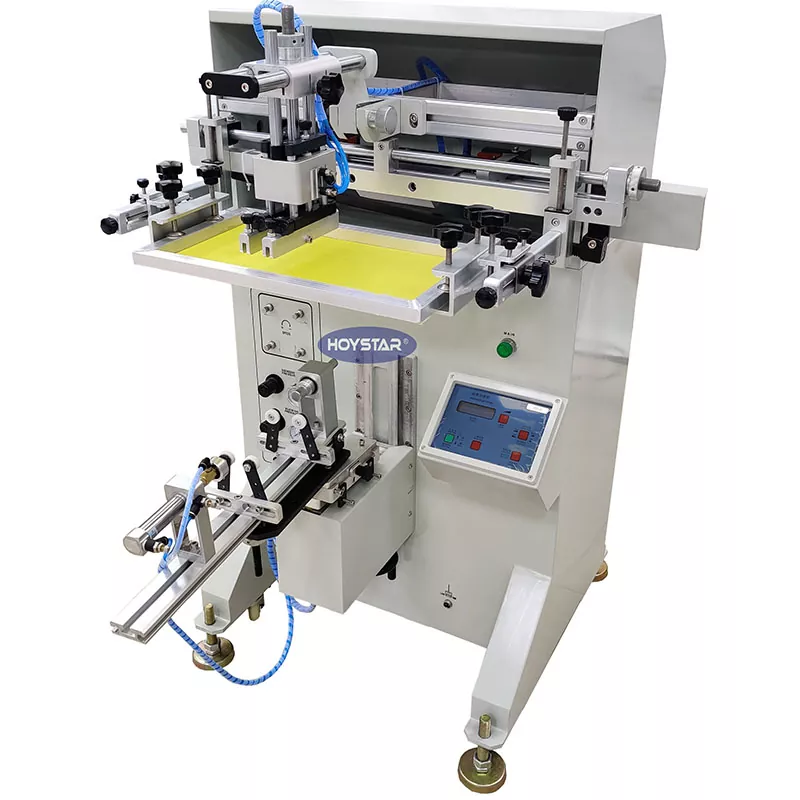
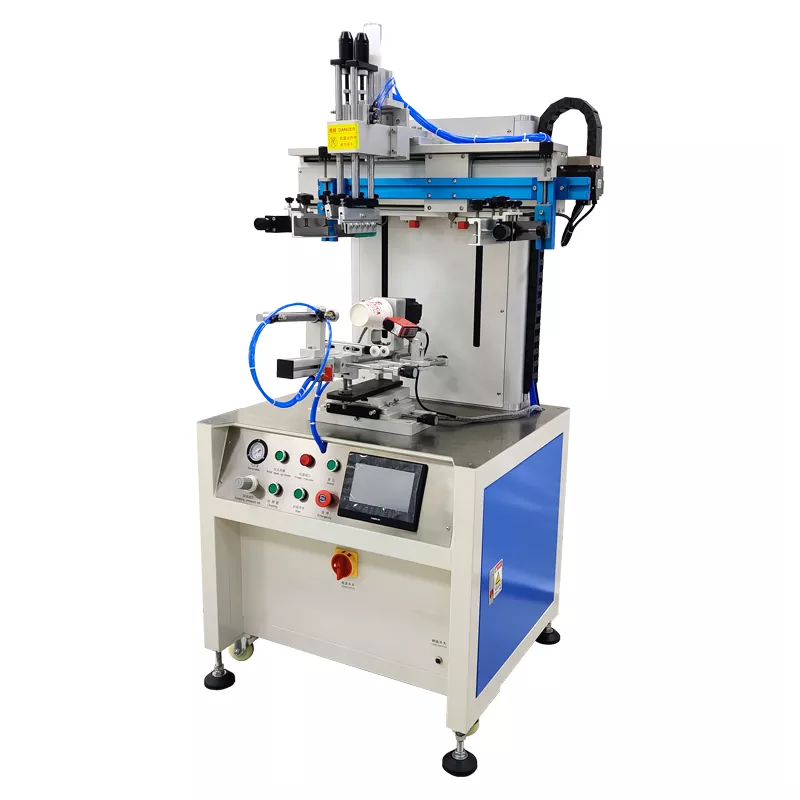
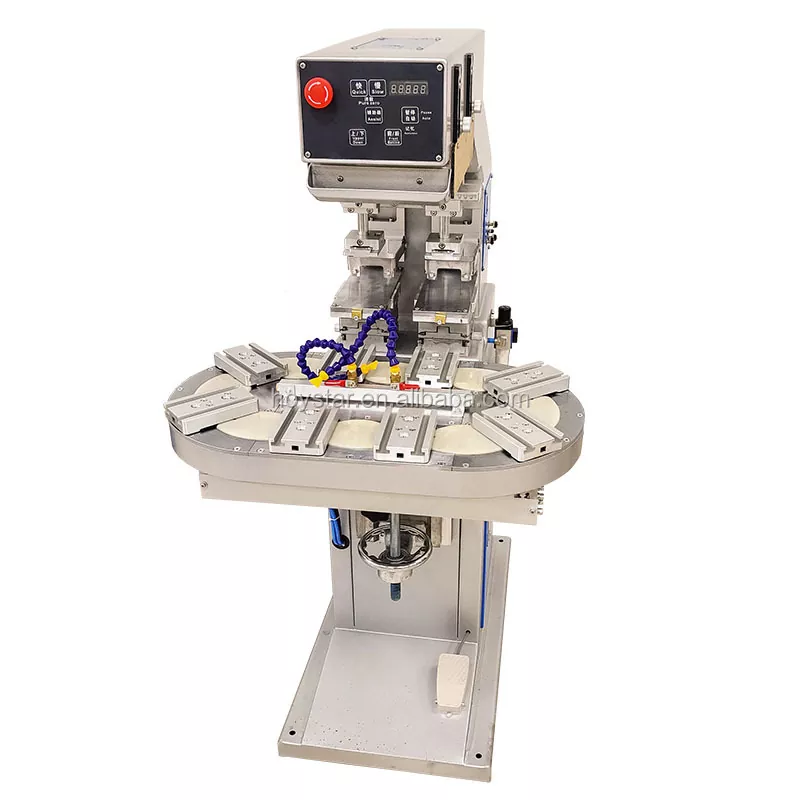
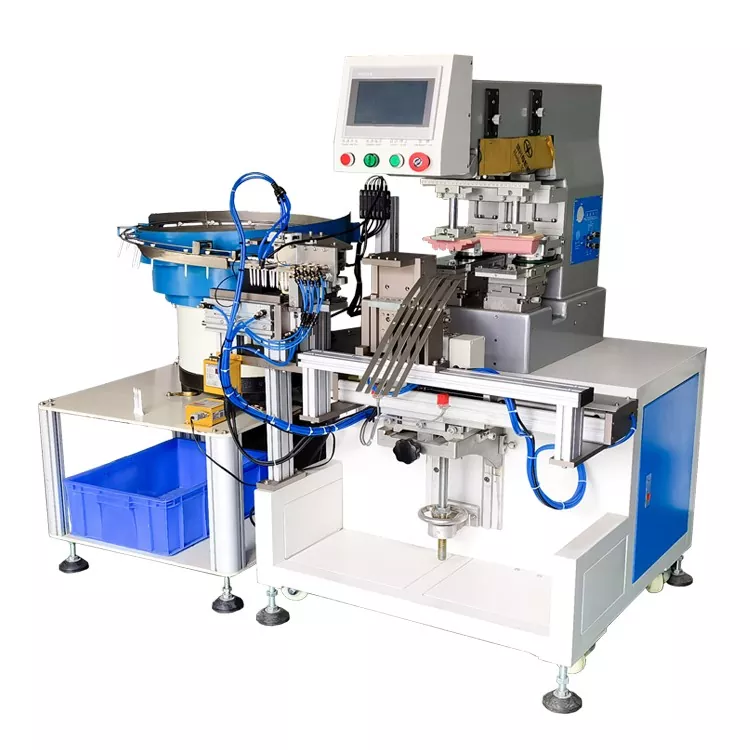
When buyers start looking at Bottle Cups Curved Screen Printing Machines, they are rarely just comparing machine pictures or speed claims. They are usually trying to solve a much more practical problem: how to print neatly on curved containers without ghosting, color misalignment, unstable registration, wasted ink, or rising labor costs. That is exactly where the right machine matters. For manufacturers printing on bottles, cups, tumblers, jars, tubes, and other cylindrical or curved products, choosing the wrong setup can slow production and hurt product appearance at the same time. In this field, Dongguan Hoystar Machinery Co., Ltd. has attracted attention by focusing on practical curved-surface printing solutions that align with real factory needs rather than vague promises.

Article Summary

This article explains what buyers should really look for when evaluating Bottle Cups Curved Screen Printing Machines. Instead of treating curved printing as a simple extension of flat printing, it breaks down the actual production challenges involved in decorating cups, bottles, cosmetic containers, and similar round products. I will cover why curved surfaces are harder to print, how machine structure affects registration and consistency, what features help reduce labor and reject rates, and how to choose between semi-automatic, fully automatic, single-color, and multi-color options. I will also discuss ink curing, fixture design, operator workload, maintenance concerns, and the return you can expect from a better printing process.

What Will This Article Cover?

  • The technical reason curved products are more demanding than flat items
  • The most common production bottlenecks in bottle and cup printing lines
  • The machine components that directly influence print quality
  • How automation level changes output, labor dependence, and consistency
  • How to match machine type to order size, product shape, and color requirements
  • A practical buying checklist for factories, converters, and brand suppliers

Why Is Curved Surface Printing More Difficult Than It Looks?

A flat product gives you a stable contact area. A bottle or cup does not. The moment a container rotates during printing, every small inconsistency becomes visible. If the fixture is not precise enough, the artwork may drift. If the screen pressure is not balanced, ink transfer can become uneven. If the product wall thickness varies, even a good operator may struggle to keep results consistent across the batch.

That is why Bottle Cups Curved Screen Printing Machines are not simply “ordinary printers with a round holder.” They need to control product positioning, rotation, contact stability, and curing workflow in a coordinated way. Buyers who overlook this often find that the machine can print a sample, but cannot hold the same quality across a long production run.

For curved products, the main challenge is not only printing the image once. The real challenge is printing the same image hundreds or thousands of times with clean edges, repeatable color placement, and acceptable scrap levels.


What Problems Do Buyers Usually Face Before Upgrading?

Most purchase decisions begin with pain. Factories usually start searching for better Bottle Cups Curved Screen Printing Machines after encountering one or more of the following issues:

  • Print registration shifts from one product to another
  • Operators spend too much time adjusting fixtures and alignment
  • Ink adhesion looks fine at first but fails later in handling or transport
  • Production speed stays low because loading and unloading depend too much on labor
  • Multi-color artwork becomes difficult to reproduce consistently
  • Different bottle sizes require long changeover times
  • Reject rates rise during larger orders, especially on promotional cups and cosmetic packaging

These are not minor inconveniences. They affect cost, lead time, brand appearance, and customer trust. A packaging buyer may tolerate a simple one-color logo on a small run, but a branded drinkware line, cosmetic container program, or promotional order often leaves little room for unstable output.

Common Problem What It Causes What Buyers Should Look For
Poor registration Blurred graphics, off-center logos, rejected batches Precision fixtures, stable indexing, reliable registration system
Slow manual handling Low output and higher labor dependency Automatic loading, printing, unloading, and curing workflow
Unstable multi-color printing Color overlap errors and inconsistent branding High-precision intermittent motion and repeatable alignment control
Frequent product changeovers Downtime and operator frustration Flexible tooling design and easier fixture replacement
Uneven ink transfer Poor appearance and customer complaints Controlled printing pressure, stable rotation, matched curing method

Which Machine Features Actually Matter in Daily Production?

Buyers are often shown long lists of technical terms, but only a few machine features make a meaningful difference in everyday work. I would focus on these first:

  • Stable fixture design so each cup or bottle sits in the same position every cycle
  • Accurate registration system for consistent print location, especially on repeat orders
  • Controlled rotation and indexing to reduce distortion on curved surfaces
  • Appropriate curing choice such as UV or IR depending on the product, ink, and output target
  • Machine rigidity because weak frames often create hidden instability during longer runs
  • User-friendly operation so setup and correction do not depend entirely on one experienced operator

A serious curved printing machine should help the factory do two things at once: protect print quality and reduce process variability. That is why the best buying decision is rarely the cheapest initial quote. It is usually the machine that gives the most reliable production rhythm.

In practical terms, that means you should ask how the machine handles bottle rotation, how fast it reaches steady output, how alignment is corrected, and how easy it is to switch between different product sizes. If the answers stay vague, that is usually not a great sign.


How Should You Choose Between Semi-Automatic and Fully Automatic Models?

This depends less on ambition and more on your order structure. If your jobs are varied, run sizes are moderate, and you need flexibility with lower initial investment, a semi-automatic machine can still be a practical option. It gives you more manual control and may suit workshops that handle different bottle or cup designs in smaller batches.

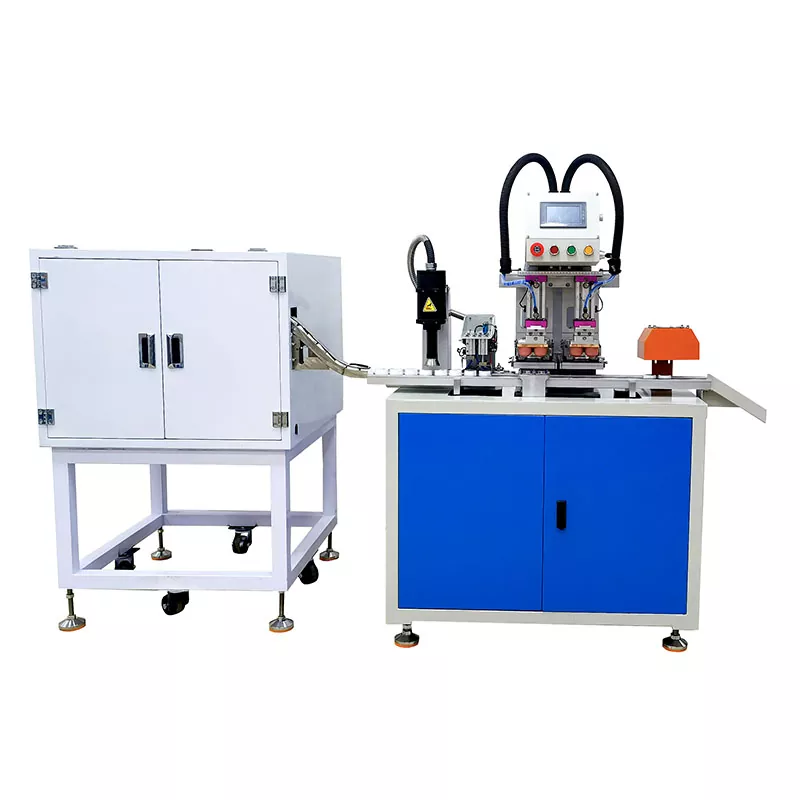
But if your operation handles stable repeat orders, branded drinkware, cosmetic packaging, or higher-volume cup production, fully automatic Bottle Cups Curved Screen Printing Machines usually make more sense. Once automatic loading, printing, unloading, and curing are integrated into one workflow, output becomes more predictable and labor pressure drops.

Machine Type Best For Main Advantage Main Limitation
Semi-Automatic Smaller batches, varied jobs, budget-conscious entry stage Lower investment and good flexibility More operator dependence and slower output
Fully Automatic Mass production, repeat orders, labor-sensitive factories Higher consistency and faster production Higher upfront cost and more planning for line integration

There is no universal winner. The right answer depends on whether your main bottleneck is budget, labor, output, or consistency. A good supplier should help match the configuration to the job instead of pushing the highest model by default.


What Is the Best Way to Decide Between Single-Color and Multi-Color Printing?

This question comes up constantly. If your products only need one-color branding, simple text, or straightforward logo application, single-color printing may be enough. It keeps setup more manageable and often improves throughput for standard work.

However, the moment you move into retail presentation, promotional graphics, beverage branding, or cosmetics, multi-color capability becomes much more important. Buyers often underestimate how much stronger shelf appearance becomes when artwork is reproduced cleanly and consistently on curved packaging.

The key issue is not “Do I like multi-color printing?” It is “Will my customers expect more visual impact within the next one to three years?” If the answer is yes, buying too narrowly today may cost more later when you need to upgrade again.

  • Choose single-color when your product range is simple and speed matters most
  • Choose multi-color when design complexity, branding quality, and repeat accuracy matter more
  • Choose with future orders in mind, not just current sample jobs

Which Products and Materials Are Suitable for These Machines?

One of the strengths of modern Bottle Cups Curved Screen Printing Machines is their broad application range. They are commonly considered for curved products such as plastic cups, bottles, tumblers, jars, cosmetic containers, tubes, and similar cylindrical packaging. This makes them useful across drinkware, personal care, packaging, promotional products, and selected industrial container applications.

But compatibility is never just about shape. Buyers should also look at surface condition, material type, ink selection, and curing requirements. A machine may handle a product mechanically, yet still need proper ink and pre-treatment choices to achieve durable print results.

Product Type Why Curved Printing Is Needed What Should Be Checked
Plastic cups Brand graphics, logos, promotional campaigns Material type, production speed, curing method
Bottles Decorative and functional labeling by direct print Diameter tolerance, wall stability, artwork placement
Cosmetic containers High visual demands and cleaner appearance Fine detail, repeat registration, finish quality
Tubes and jars Round-surface branding and product identification Fixture matching, handling method, drying efficiency

The most reliable decision comes from evaluating product samples under real production conditions rather than relying on broad suitability claims alone.


How Can You Evaluate a Machine Before You Buy?

I would never evaluate curved printing equipment based only on catalog language. A more practical buying method is to walk through a short checklist:

  1. Check whether the machine has been matched to your actual bottle or cup dimensions
  2. Ask to review sample prints on materials close to your real products
  3. Confirm whether the machine is better suited to short runs, repeat orders, or continuous mass production
  4. Look at fixture design and changeover convenience
  5. Ask how registration is adjusted and maintained
  6. Confirm the curing method required for your target ink system
  7. Ask what level of training an operator needs to run the machine steadily
  8. Evaluate support, spare parts, and post-sale response

This is where supplier experience matters. A capable manufacturer should not just say “yes, it can print.” They should help define the right printing area, color requirement, automation level, and process arrangement based on your production target.

That is also why many buyers prefer to work with companies that offer a broader curved-surface machine range. It becomes easier to compare model logic instead of being forced into a one-size-fits-all recommendation.


Why Do Better Curved Screen Printing Machines Improve Profitability?

Buyers often focus on purchase price first, but the deeper cost is usually hidden in waste, downtime, labor, and inconsistency. A stronger curved printing setup can improve profitability in several ways:

  • Lower reject rates due to better registration and steadier printing
  • Reduced labor intensity, especially with automated loading and unloading
  • Faster throughput on repeat production
  • Shorter adjustment time between confirmed jobs
  • More stable product appearance, which supports brand value
  • Better capacity to take on higher-standard customers

In other words, better Bottle Cups Curved Screen Printing Machines do not only print more. They help a factory print with less friction. That difference becomes very obvious once order volume increases or quality expectations rise.

For a buyer, the best machine is not simply the one with the highest specification. It is the one that removes the most costly points of instability from the production line.


FAQ

What are Bottle Cups Curved Screen Printing Machines mainly used for?

They are mainly used to print graphics, logos, text, and decorative patterns on curved or cylindrical products such as cups, bottles, tumblers, jars, tubes, and cosmetic containers.

Are Bottle Cups Curved Screen Printing Machines suitable for small factories?

Yes. Smaller factories often start with semi-automatic models because they offer flexibility and lower entry cost. The best choice depends on order volume, product range, and operator skill.

Do I need a fully automatic machine for cup printing?

Not always. If your order size is modest and product changes are frequent, semi-automatic production may be enough. Fully automatic machines become more attractive when you need faster output, lower labor dependence, and more consistent long-run performance.

How important is registration accuracy in curved printing?

It is critical. Curved products make alignment errors more visible, especially with logos, text, and multi-color designs. Good registration directly affects print appearance and reject rate.

Can one machine handle different bottle and cup sizes?

In many cases, yes, but the ease of changeover depends on fixture design, machine configuration, and how different the product dimensions are. This is something buyers should confirm before placing an order.

What should I ask a supplier before purchasing?

Ask about sample testing, compatible product sizes, automation options, registration control, curing method, changeover time, spare parts support, and training requirements.


What Should Be Your Next Step?

If you are comparing Bottle Cups Curved Screen Printing Machines, the smartest next step is to define your real production target before you compare quotations. Look at your product shape, print complexity, order volume, labor availability, and expected future growth. Once those factors are clear, it becomes much easier to choose between semi-automatic and fully automatic models, single-color and multi-color setups, and different curing or handling arrangements.

A good machine should do more than complete a sample. It should help your factory maintain appearance, speed, and consistency under real production pressure. If you are looking for a more practical way to improve curved surface printing for bottles, cups, and similar containers, Dongguan Hoystar Machinery Co., Ltd. is worth evaluating based on your exact application needs. Contact us to discuss your product specifications, printing goals, and production volume, and find a machine solution that fits your business instead of forcing your business to fit the machine.

Related News
Leave me a message
X
We use cookies to offer you a better browsing experience, analyze site traffic and personalize content. By using this site, you agree to our use of cookies. Privacy Policy
Reject Accept