Buyers usually start looking for an Infrared Drying Machine when the same problems keep showing up on the shop floor: ink that stays tacky too long, uneven curing, rework caused by smudging, and delivery schedules that become harder to control with every batch. In this article, I explain where those issues come from, how infrared drying helps solve them, and what decision points matter most before investing in a new system.
I also cover the practical side that purchasing teams care about most, including line matching, material compatibility, operating cost, safety, maintenance, and the difference between compact units and conveyor-based solutions. Along the way, I will naturally introduce Dongguan Hoystar Machinery Co., Ltd. as a manufacturer that supports printing and industrial users looking for a more stable and scalable drying process.
In most factories, drying does not attract attention until it becomes the bottleneck. A print line can have a good press, trained operators, and stable material supply, yet still struggle because the drying stage refuses to keep up. I have seen this happen in shops handling labels, textiles, plastic parts, promotional items, panels, and other coated products. The pattern is always familiar. Output looks acceptable at the printing station, but quality problems appear a few minutes later.
That is usually when an Infrared Drying Machine enters the conversation. Not because it sounds advanced, but because buyers are tired of losing time and margin to preventable issues.
The real pain point is not only drying speed. It is process stability. When drying is inconsistent, every downstream step becomes harder to manage. That means more inspection, more manual judgment, more operator fatigue, and more risk of disappointing the customer.
If your line is already producing acceptable output but feels fragile under pressure, the drying stage is often the first place worth upgrading.
Traditional heating methods often spend too much energy warming the surrounding air before enough heat reaches the coated surface. That delay is exactly what frustrates production managers. An Infrared Drying Machine works differently because infrared radiation transfers heat to the target area more directly. In practical terms, this can help the coating or ink film reach a workable drying state faster and more evenly.
This matters in real production because faster heat response usually means shorter waiting time, better control, and fewer surface defects. Instead of treating drying as a passive stage, you turn it into a controlled part of the process.
| Drying Method | Typical Shop-Floor Challenge | What Buyers Usually Notice | Why Infrared Gets Attention |
|---|---|---|---|
| Ambient or natural drying | Too slow for commercial output | Large work-in-progress buildup | Infrared shortens waiting time and improves flow |
| General hot-air heating | Heat loss to surrounding air | Higher energy use and less direct heating effect | Infrared targets the product surface more efficiently |
| Improvised manual drying | Inconsistent operator control | Uneven results between batches | Infrared systems are easier to standardize |
| Older fixed drying stations | Limited flexibility for product changes | Setup trouble when order mix changes | Infrared solutions can be selected for compact or continuous production |
This is why manufacturers that handle varied order sizes often move toward Infrared Drying Machine solutions. They are not simply buying heat. They are buying control, repeatability, and breathing room in the production schedule.
Buyers do not invest in equipment because a brochure sounds nice. They invest because the machine removes daily friction. When I look at what matters most in actual production meetings, the priorities are usually very practical.
This is also where Dongguan Hoystar Machinery Co., Ltd. becomes relevant to the conversation. Buyers looking at its product direction are not only looking for a machine that can generate heat. They are looking for a system that fits different scales of production, from compact jobs to more continuous conveyor-based operation. That flexibility is attractive because not every buyer has the same factory layout, product size, or throughput target.
Another reason the Infrared Drying Machine category appeals to experienced buyers is that it supports cleaner operational thinking. Once drying performance becomes more stable, the team can set better standards for dwell time, temperature adjustment, product spacing, and acceptable output. The process becomes less dependent on guesswork.
This is where many buyers get caught. They compare only price, or they focus only on heating power, and then wonder why the machine does not match their actual workflow. A better way is to compare by application logic.
| Machine Type | Best Fit | Main Advantage | What to Check Carefully |
|---|---|---|---|
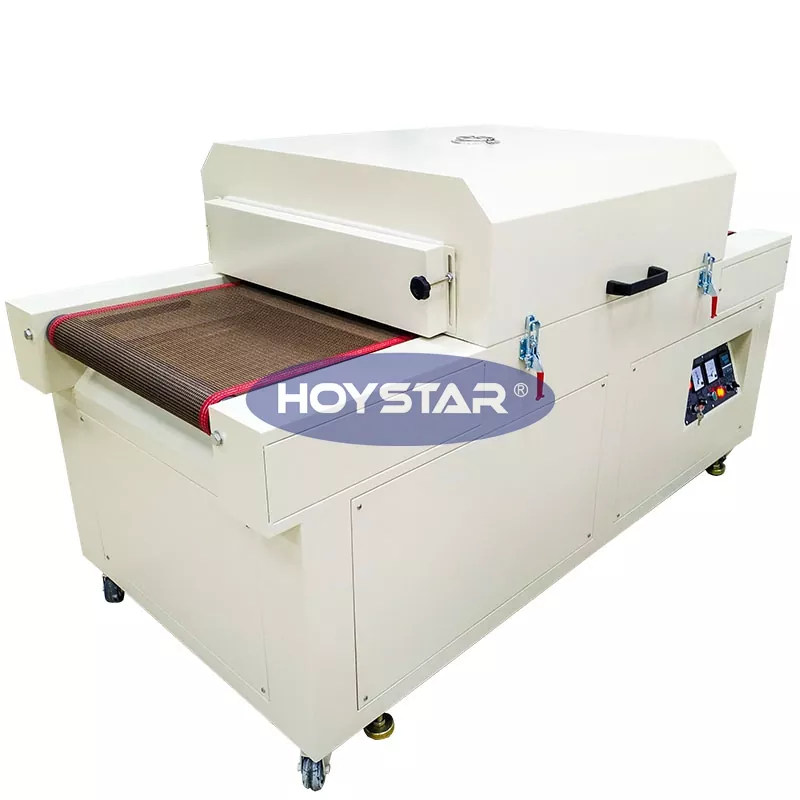
| Compact or mini unit | Labels, gloves, small plastic parts, stationery, promotional items | Space-saving and convenient for short runs or focused work areas | Working area, lamp layout, and whether it matches your product size |
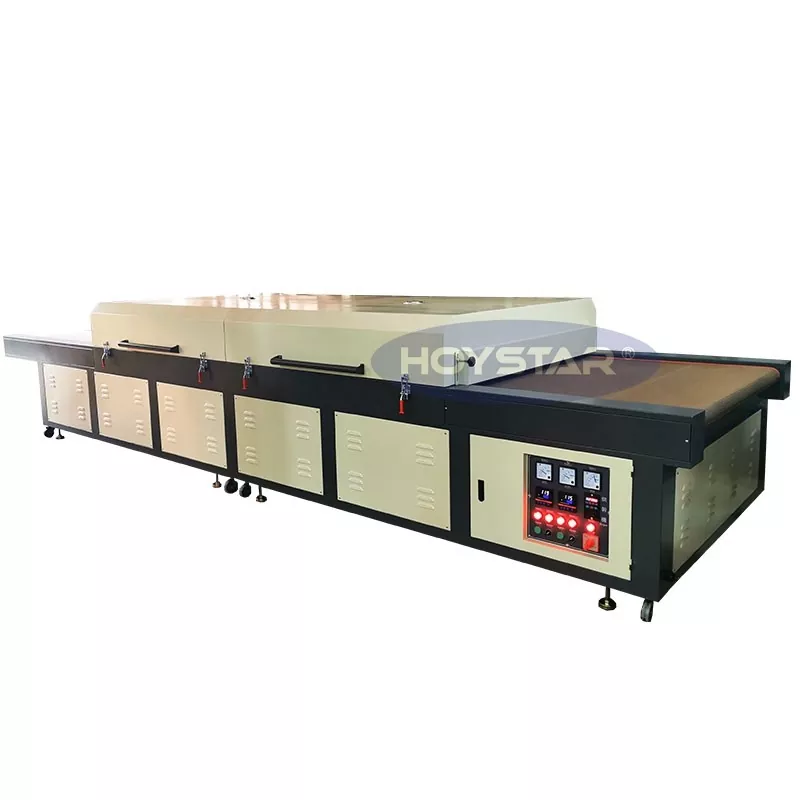
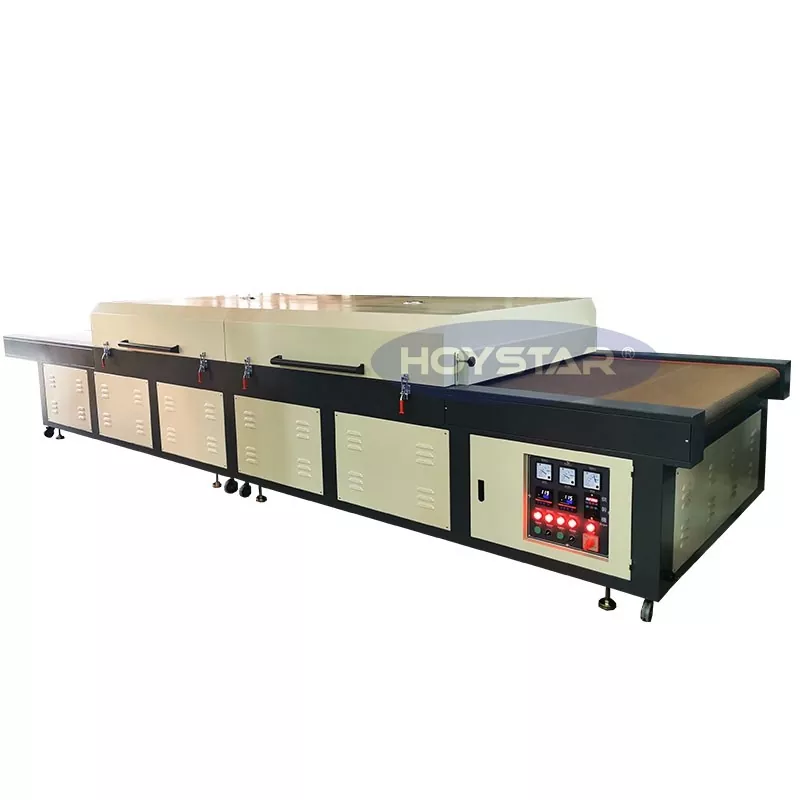
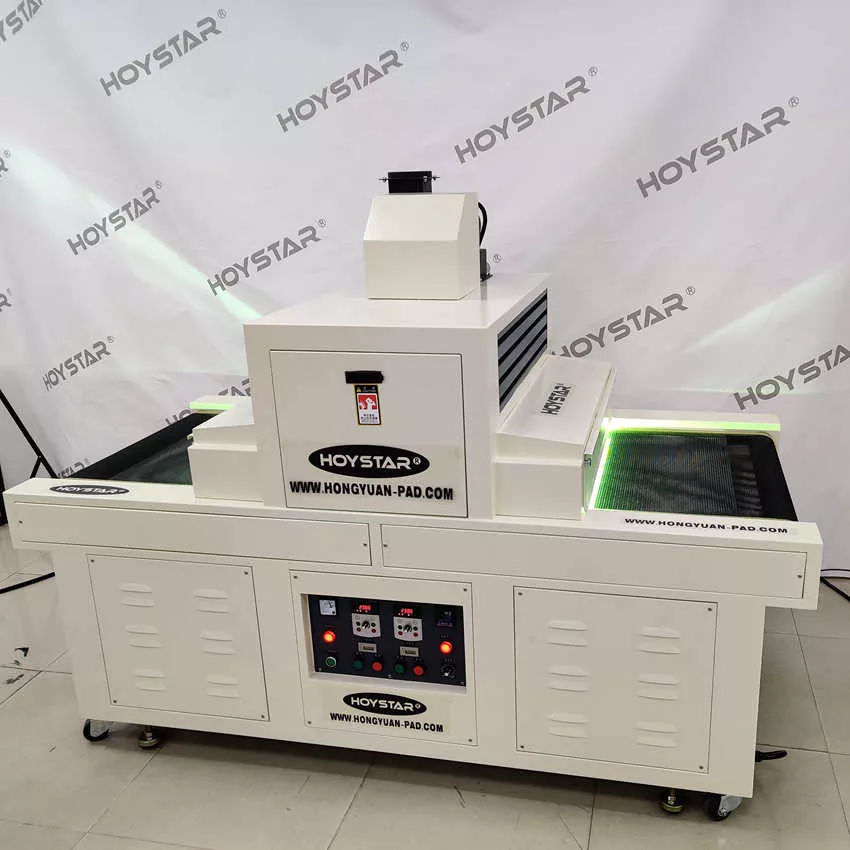
| Conveyor infrared dryer | Textiles, banners, larger flat products, continuous output lines | Supports steady throughput and smoother integration with production flow | Belt width, speed control, and capacity under real production load |
| Customized line-matching system | Mixed products or non-standard workflows | Better process fit and easier long-term scaling | Supplier communication ability and willingness to adjust specifications |
A good Infrared Drying Machine selection should answer these questions clearly:
Once you compare machines this way, the purchase becomes much easier to justify internally. You are no longer choosing a generic dryer. You are choosing a production tool with a clear business effect.
The machine itself matters, but supplier quality matters just as much. I would never recommend choosing an Infrared Drying Machine based on photos alone. A reliable supplier should help you understand fit, not just push inventory.
Before you move forward, I would check the following:
This is one reason buyers often prefer to work with established manufacturers such as Dongguan Hoystar Machinery Co., Ltd.. For industrial equipment, confidence does not come from polished wording alone. It comes from whether the supplier can discuss production details, recommend practical configurations, and keep supporting the machine after delivery.
A trustworthy supplier should be comfortable discussing your material, coating type, product dimensions, expected output, and operating environment before giving a recommendation.
The value of an Infrared Drying Machine becomes clearest when the operation has one or more of the following characteristics: tight delivery windows, repeated coated surfaces, changing product sizes, or quality complaints linked to drying consistency.
Typical application environments include:
When buyers ask whether the investment is worth it, I usually turn the question around. How much is the current drying problem already costing you? If operators wait, products pile up, or defects appear after transfer, the cost is already there. It is simply hidden inside labor loss, missed capacity, unstable output, and customer risk.
In that sense, the right Infrared Drying Machine is not just a drying device. It is a stability upgrade for the whole production rhythm.
Is an Infrared Drying Machine suitable only for large factories?
No. Smaller workshops can also benefit, especially if they handle repeated short runs, printed parts, or products that are sensitive to inconsistent drying. Compact units can be a practical entry point.
Can one machine handle different product types?
In many cases, yes, but only if the working area, heat control, and throughput capacity are selected properly. That is why discussing your main products with the supplier before purchase is important.
Will an Infrared Drying Machine help reduce rework?
It often does, especially when rework is caused by slow surface curing, smudging during handling, or uneven drying. Better drying consistency supports better final appearance and more reliable downstream handling.
What is more important, heating power or machine layout?
Both matter, but layout and application matching are often underestimated. A machine with strong heating but poor fit for your product size or workflow may still perform badly in real production.
How can I judge whether a supplier is worth contacting?
Look for a supplier that asks detailed questions, explains suitable model logic, discusses safety and support clearly, and can speak confidently about customization, maintenance, and shipment.
If your operation is losing time to slow curing, inconsistent finish quality, or avoidable delays between production steps, waiting usually does not make the problem smaller. It simply turns a manageable weakness into a long-term habit. A well-matched Infrared Drying Machine can help you produce more confidently, reduce quality variation, and create a smoother workflow from printing to final handling.
For buyers who want a solution that fits real manufacturing conditions instead of generic sales language, Dongguan Hoystar Machinery Co., Ltd. is worth evaluating. If you are ready to improve drying efficiency, reduce rework, and choose a machine that fits your line instead of forcing your line to adapt, contact us today and start the conversation with your product size, material, and production target. A better drying process can begin with one practical inquiry.
Phone: +86-769-85377425
Mobile: +86-15913838969
E-mail: admins@hongyuan-pad.com
Address:No.3, Zhenglong Road, Hengzeng Street, ChanganTown, Dongguan city, Guangdong Province, China
Copyright © 2025 Dongguan Hoystar Machinery Co., Ltd. All Rights Reserved.