Follow Us:

News

Why Is a Two Color Rotary Table Pad Printing Machine the Best Choice for High-Speed and Precision Multi-Color Printing

2026-06-18 0 Leave me a message

In today's competitive manufacturing environment, companies require printing solutions that deliver speed, consistency, and superior print quality. As a professional printing equipment manufacturer, HOYSTAR provides advanced Two Color Rotary Table Pad Printing Machine solutions designed to meet the growing demands of industries such as electronics, medical devices, promotional products, automotive components, toys, and packaging. By combining rotary table automation with precise two-color pad printing technology, these machines significantly improve production efficiency while maintaining excellent print accuracy.

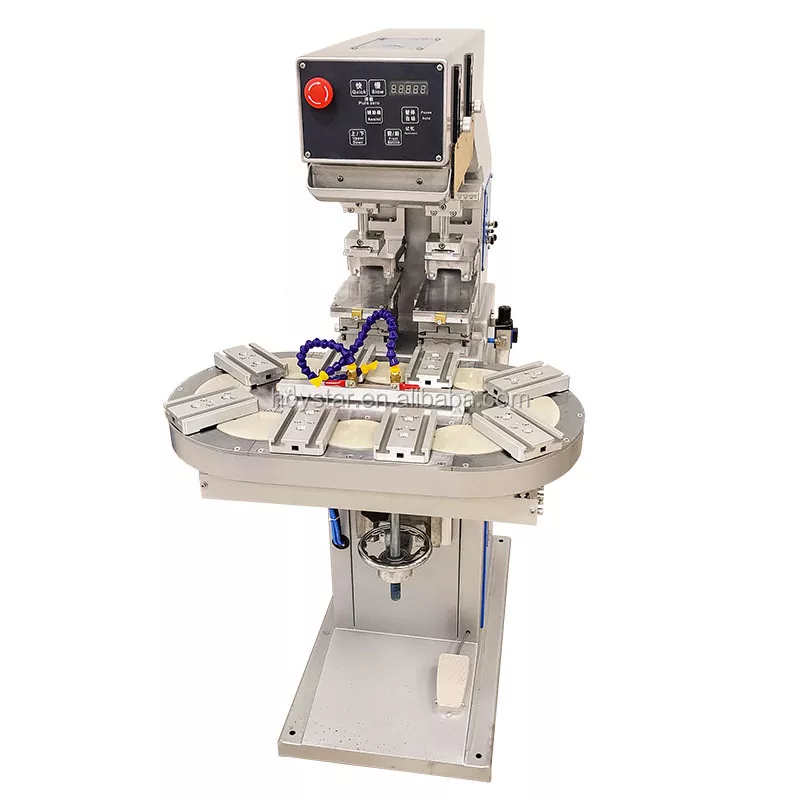
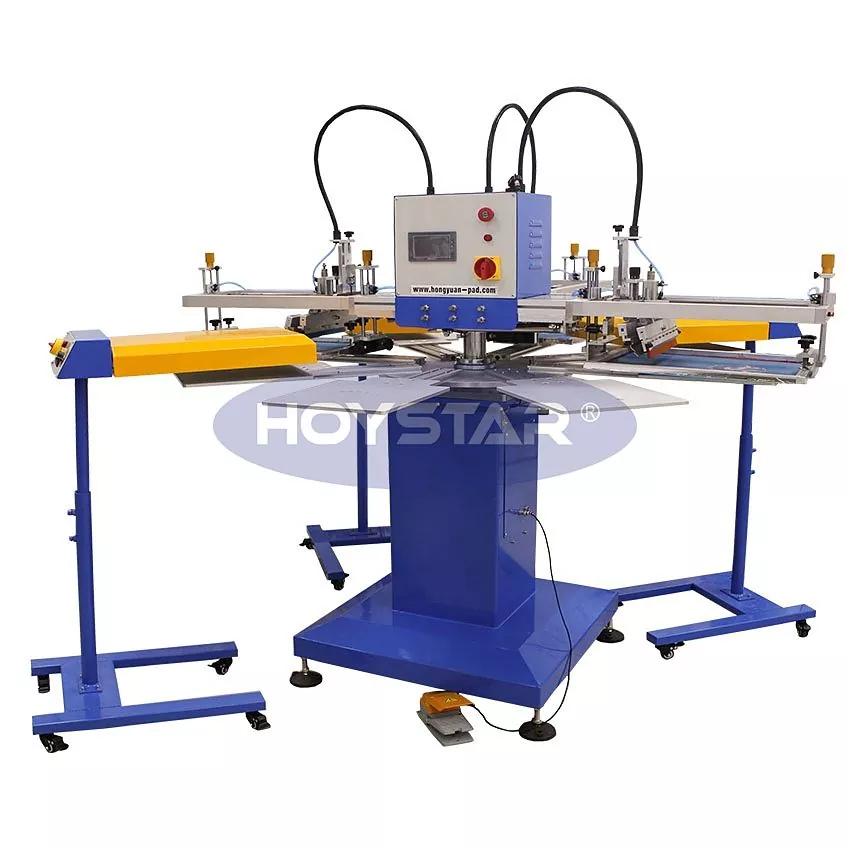
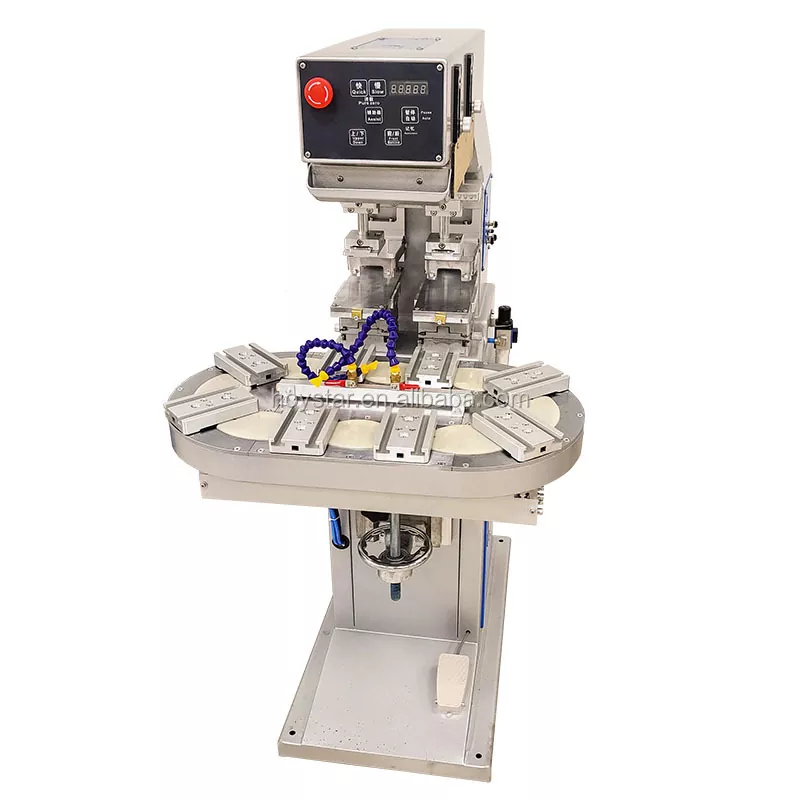
Two Color Rotary Table Pad Printing Machine

Table of Contents


What Is a Two Color Rotary Table Pad Printing Machine?

A Two Color Rotary Table Pad Printing Machine is an automated printing system that uses two separate ink cups and cliché plates to transfer two different colors onto a product surface through silicone pads. The rotary indexing table automatically rotates workpieces between printing stations, enabling efficient multi-color printing with excellent registration accuracy.

Unlike manual or semi-automatic systems, rotary table configurations allow continuous production cycles, reducing operator intervention and increasing throughput.

Component Function
Rotary Table Automatically indexes products between stations
Silicone Pad Transfers ink from plate to product surface
Ink Cup System Supplies and controls ink distribution
Steel Plate (Cliché) Contains engraved artwork
Control System Manages printing sequences and automation

How Does a Two Color Rotary Table Pad Printing Machine Work?

The printing process follows a precise sequence designed to ensure accurate color registration and repeatability.

  1. The product is loaded onto the rotary fixture.
  2. The first color image is transferred from the cliché plate to the silicone pad.
  3. The pad deposits the image onto the product.
  4. The rotary table indexes to the next station.
  5. The second color is printed in precise alignment.
  6. The finished product exits the machine.

This automated workflow minimizes production bottlenecks and supports high-volume manufacturing operations.


Key Advantages of Using a Rotary Table Pad Printing Machine

Higher Production Efficiency

Rotary indexing enables multiple operations to occur simultaneously, significantly increasing production output compared to shuttle-type machines.

Superior Color Registration

Accurate fixture positioning ensures consistent alignment between colors, resulting in professional-quality printing.

Reduced Labor Costs

Automation reduces manual handling requirements and operator workload.

Versatile Product Compatibility

Pad printing technology can print on:

  • Flat surfaces
  • Curved surfaces
  • Irregular geometries
  • Textured materials
  • Small precision components

Improved Production Consistency

Automated control systems maintain repeatable printing parameters throughout long production runs.


Important Features to Look For

When evaluating a Two Color Rotary Table Pad Printing Machine, manufacturers should consider the following features:

Feature Benefit
Servo Control System Improved precision and repeatability
Closed Ink Cup Reduced solvent evaporation
Touchscreen Interface Easy operation and setup
Programmable Logic Controller Flexible production management
Safety Protection System Enhanced operator safety
Multi-Station Rotary Table Higher production efficiency

Industries and Applications

The versatility of rotary table pad printing machines makes them suitable for numerous industries.

Electronics Industry

  • Remote controls
  • Computer accessories
  • Mobile phone components
  • Electronic housings

Medical Industry

  • Syringes
  • Medical instruments
  • Diagnostic devices
  • Surgical equipment

Automotive Industry

  • Dashboard buttons
  • Control panels
  • Switches
  • Interior trim components

Promotional Products

  • Pens
  • USB drives
  • Corporate gifts
  • Customized merchandise

Rotary Table vs Conventional Pad Printing Machines

Criteria Rotary Table Machine Conventional Machine
Production Speed High Moderate
Automation Level Advanced Basic
Labor Requirement Low Higher
Multi-Color Capability Excellent Limited
Print Consistency Outstanding Variable
Long-Term Productivity Superior Average

How to Choose the Right Machine

Selecting the ideal machine depends on several operational factors.

  • Production volume requirements
  • Product size and shape
  • Number of colors required
  • Printing accuracy expectations
  • Future scalability plans
  • Available factory space
  • Automation integration needs

Working with an experienced manufacturer like HOYSTAR can help ensure the selected equipment matches your production goals and budget.


Maintenance Best Practices

Routine maintenance is essential for maximizing machine lifespan and maintaining print quality.

Daily Maintenance

  • Clean pads and cliché plates
  • Check ink viscosity
  • Inspect safety systems
  • Remove production debris

Weekly Maintenance

  • Lubricate moving components
  • Inspect pneumatic systems
  • Verify fixture alignment
  • Check electrical connections

Monthly Maintenance

  • Perform full system calibration
  • Replace worn consumables
  • Review controller settings
  • Inspect indexing mechanisms

Future Trends in Pad Printing Automation

The pad printing industry continues to evolve through technological innovation. Future developments include:

  • AI-assisted process monitoring
  • Industry 4.0 connectivity
  • Remote diagnostics and maintenance
  • Smart production analytics
  • Enhanced servo-driven accuracy
  • Energy-efficient machine designs

Manufacturers investing in advanced rotary table systems today are positioning themselves for greater competitiveness in tomorrow's automated production environment.


Frequently Asked Questions

1. What products can be printed using a Two Color Rotary Table Pad Printing Machine?

The machine can print on plastic, metal, glass, ceramic, rubber, and many irregularly shaped products commonly used in electronics, automotive, medical, and promotional industries.

2. How accurate is color registration?

Modern rotary table machines offer highly accurate positioning systems that maintain consistent alignment between colors throughout production runs.

3. Is the machine suitable for high-volume manufacturing?

Yes. Rotary table automation is specifically designed for continuous production environments and can significantly increase output compared to manual systems.

4. How many operators are required?

Most systems require only one operator for loading, monitoring, and quality inspection, depending on the level of automation.

5. What maintenance is required?

Regular cleaning, lubrication, inspection of pneumatic systems, and periodic calibration are recommended to maintain optimal performance.

6. Can the machine be customized?

Yes. Manufacturers often provide customized fixtures, automation options, feeding systems, and unloading solutions based on production requirements.


Conclusion

A Two Color Rotary Table Pad Printing Machine offers an ideal combination of speed, precision, automation, and versatility for modern manufacturing environments. Its ability to deliver accurate multi-color printing while reducing labor costs and increasing productivity makes it a valuable investment for businesses seeking long-term operational efficiency.

If you are looking for a reliable and high-performance pad printing solution, HOYSTAR is ready to help. Our experienced team can provide professional guidance, customized machine configurations, and comprehensive technical support tailored to your production requirements. Contact us today to discuss your project and discover how our advanced pad printing technologies can help your business achieve greater productivity and printing excellence.

Related News
Leave me a message
X
We use cookies to offer you a better browsing experience, analyze site traffic and personalize content. By using this site, you agree to our use of cookies.Privacy Policy
RejectAccept